

Mental health is no longer a personal issue; it is a business issue. Currently, employees in Kuala Lumpur, Penang, Johor Bahru, and across Malaysia are silently battling stress, anxiety, and depression. And most employers have no idea it is going on or how much it is costing them.
A landmark study by RELATE Malaysia estimated that the cost of mental health problems in the workplace for the Malaysian economy was RM14.46 billion in one year. Absenteeism was RM3.28 billion, presenteeism RM9.84 billion and staff turnover RM1.34 billion. Krinstitute That is a large number. That is 1% of the whole country’s GDP, a silent bleed on businesses in every sector.
If you are an HR manager, a business owner, or a CEO, this article is for you. Understanding the mental health crisis in your workforce is the first step to protecting your people!

The Scale of the Problem in Malaysia
Malaysia has a much higher prevalence of mental health problems than many people know. According to the National Strategic Plan for Mental Health 2020-2025 published by the Ministry of Health Malaysia, the prevalence of mental health problems among individuals aged 16 years and above in Malaysia was 29.2% in 2015, with East Malaysia having the highest prevalence of 43% followed closely by Kuala Lumpur at 40%.
Things have not gotten better since. The National Health and Morbidity Survey (NHMS) 2023 has revealed that the depression rate in Malaysia has doubled between 2019 and 2023. WHO The same survey found that depression is currently affecting about one million Malaysians (4.6 percent of those over age 15) with nearly half of those affected reporting thoughts of self-harm or suicide.
A national study found that 53% of Malaysian working population suffer from high work-related stress with one in five employees reported symptoms of anxiety and depression. But just 13% of staff know of any wellbeing interventions in their company, even though 63% of employers recognise the impact of employee health and wellbeing on company success. There is a grave gap between knowing and doing.
The government has taken steps to address this. The Ministry of Health launched the National Strategic Plan for Mental Health 2020–2025, which aims to make mental health a priority across all ministries and agencies. The plan's core aims include reducing adolescent depression rates from 18% to 10% by 2025, with the National Centre of Excellence on Mental Health (NCEMH) leading the development of comprehensive action plans supported by WHO and UNICEF.
NGOs such as MIASA and RELATE Malaysia have also been active in raising awareness and offering support services. However, Malaysia’s Budget 2024 only allocated 0.89% of the healthcare budget to mental health, a decrease from 1.11% in Budget 2023, and still far below the WHO’s recommendation of 2.40% for upper middle-income countries. This puts a big burden on employers to deal with mental health in the workforce. And if nothing changes, the consequences will only get larger.
What happens when mental health goes ignored: The warning from Japan!
Malaysia need not look far to see where this leads. In Japan, the failure to treat workplace stress has led to a national crisis of karoshi, or “death by overwork.” Japan’s Ministry of Health, Labor and Welfare announced 1,304 recognised cases of overwork-related deaths and health disorders in fiscal 2024, with 1,057 of them involving depression and other mental health disorders, the first time that mental health cases have exceeded 1,000 in a year. Japan’s 2022 white paper showed 2,968 people died by suicide linked to karoshi in that year, compared with 1,935 in 2021.
This is not just a problem for Japan. The WHO and ILO jointly estimated that in 2021, health conditions related to overwork were associated with nearly 750,000 deaths worldwide. The lesson for Malaysian employers is clear: if stress at work and mental health struggles are left unaddressed, the human cost is irreversible. The legal and reputational cost to organisations is enormous.
How Mental Health Issues Impact Your Company's Costs
Many employers think of mental health as a "small" issue. But its financial impact is very concrete. It shows up in three very specific ways: absenteeism, presenteeism, and employee turnover.
Absenteeism
The most obvious cost is absenteeism : workers are sick, or taking long-term medical leave for mental health issues. A study conducted by RELATE Malaysia estimated that absenteeism alone costs Malaysian employers RM3.28 billion a year. When employees are absent, it creates a backlog of work for their colleagues, missed deadlines, and a loss of productivity for the team as a whole.
Presenteeism : The hidden cost everyone ignores.
The bigger but less visible problem is presenteeism. It describes employees who are present at work but are not mentally present and unable to focus, make decisions or perform at their usual level because of stress, anxiety or depression. Presenteeism made up the largest part by RM9.84 billion.
Think about what that looks like in practice. An employee is at their desk every day, answering emails, attending meetings. But they are running at 50% capacity. They did errors, response times slow and customer relationships suffer. And because the person is physically present, most managers never realise anything is wrong.

High staff turnover
When employees are mentally exhausted, burnt out, or feel unsupported, they leave. Staff turnover linked to mental health costs Malaysian employers RM1.34 billion annually. Replacing an employee typically costs 50% to 200% of their annual salary when you factor in recruitment fees, onboarding time, training, and the productivity dip while the new hire gets up to speed. For a company of 200 people, even a small increase in turnover from mental health reasons can cost hundreds of thousands of ringgit each year.
A 2024 survey of 1,015 employees in Malaysia found that burnout had risen sharply from 58% in 2022 to 67% in 2024, with millennials suffering the most at 69%. If the majority of the companies in Malaysia have a workforce that is predominantly made up of employees in their 20s and 30s today, then you should be very worried about this trend.
How Companies Can Tackle This and What Actually Works
The good news is that mental health is preventable and treatable in the workplace. And the ROI is real. The World Health Organization says on average, for every dollar a company spends on mental health support, it gets back four dollars. This isn’t charity but it’s smart business.
Here is what a practical, effective corporate mental health program looks like:
1. Mental health talks and awareness workshops
The first step is to break the silence. Many employees suffer in silence, not realizing that what they are experiencing has a name, or that help is available. The conversation starts with a formal mental health discussion – carried out in the workplace by a trained professional. It normalises the subject, reduces stigma and helps employees identify warning signs in themselves and their colleagues.
Topics covered in these sessions can include managing stress, recognising burnout, building emotional resilience and when to seek professional help. At Vealth.me, our mental health talks on site are customized to your team’s industry and challenges.
2. Stress-release and team bonding activities
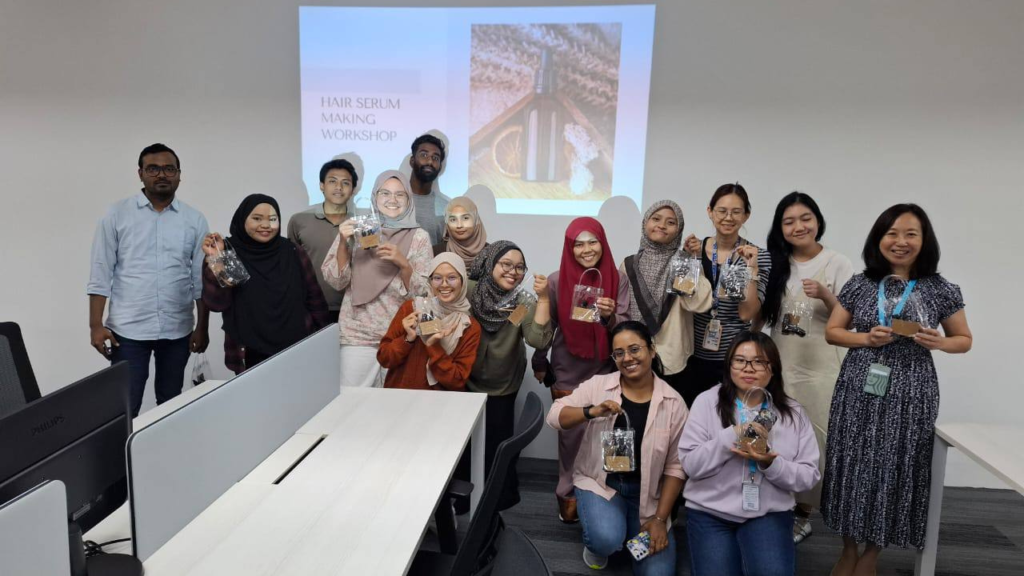
Chronic workplace stress accounts for most mental health decline at work. Activities that get employees to laugh, unwind and reconnect with their colleagues are not just “fun” but they are therapeutic. Art therapy sessions which are one of the most effective tools for employees to express difficult emotions in a safe, non-verbal manner. Team bonding activities with wellness features are a long-term investment, unlike one-off events that are forgotten in a week.
This philosophy is the cornerstone of Vealth.me’s wellness programs that are designed to blend wellbeing with genuine team connection, so staff walk away feeling better about themselves and their work environment.
3. One-to-one consultation and counselling access
One-to-one support is essential for employees who are already struggling. Employees can access confidential one-on-one consultation either with a wellness professional or a clinical counsellor, allowing for a private space to process what they are going through without fear of judgement from management or colleagues.
By introducing this as part of a corporate wellness program, employees in crisis will have somewhere to turn before a small problem becomes a serious one.
4. Long-term, structured wellness programs
One-off events don’t drive cultural change. But what really moves the needle is a structured corporate wellness program over 3 to 6 months, a blend of regular activities, health screenings and ongoing support. It tells employees that the company cares about their wellbeing, that it’s not just a box to tick during HR week.
The best thing? In Malaysia, corporate wellness programs that include mental health components are HRDC claimable, meaning you can offset the cost through your Human Resources Development Fund contributions. There is really no reason to hold out.
Take Action Before It Costs You More
Mental health is not a problem of the future. It’s happening in your company right now. That is the question, will you choose to address it proactively or wait for the cost to show up in sick leave, resignations and a declining team performance.
63% of employers in Malaysia acknowledge that employee health and wellbeing impacts organisational success but only 13% have taken formal steps to act on it. That’s an opportunity. Companies that invest in the mental health of their people today will have healthier, more loyal and productive teams tomorrow.
If you are looking for a mental health program for your employees, contact Vealthme today. Our team of certified wellness professionals designs customised programs for companies across Malaysia, from mental health talks and stress management workshops to team bonding activities and one-to-one counselling. We come to your office, so there is no travel time and no disruption to your workday.
Reach out to us at vealthme.com or drop us a message at [email protected] to find out how we can support your team.

