
Malaysian HR managers face the same task every year: organising the company’s annual health screening. And every year the same question comes up and do we send employees to a clinic, or do we bring the screening to them?
Sounds like a straight logistical choice. But the decision is way more than that as it impacts how many employees will take part, how much it costs the business in hidden time, how much stress it adds to your HR team and ultimately – whether your wellness programs actually works.
Let's be honest about it.
The way it used to be. Employees are provided with a list of partner clinics or panel hospitals, asked to make their own bookings and told to go within a stipulated period and usually within a quarter or before their employment anniversary.

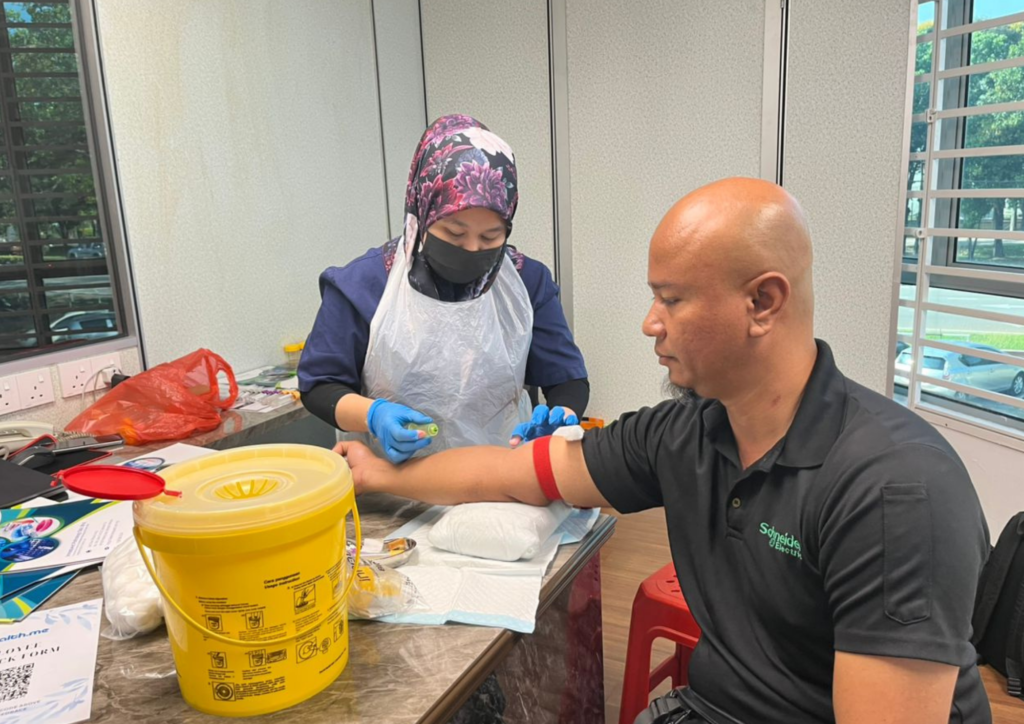
A professional health screening team will come directly to your office, factory or facility. Screening is done on-site during working hours, with employees passing through in organised groups during the day. This is not a newer or less rigorous approach, just a smarter one.
This is the most common assumption and it deserves a straight answer.
When you calculate the real cost of a clinic-based programme, the figures can tell a different story:
On-site health screening brings all of this together into one efficient, well-managed event. For most companies, especially those with 20 or more employees, the total cost, when properly measured, is about the same or lower, and the results are much better.
On-site health screening is a benefit to nearly any Malaysian company, but is especially useful for:
We come to your workplace fully equipped with our own tools, people and supplies. We offer our signature 10-Minute Health Check which includes the blood and urine test and you can also do diagnostic machine test such as body composition analysis as well as ultrasound.
We adjust our services to fit your schedule, manage the flow of employees through the screening process, offer individual result summaries, and identify any employees who may require additional attention.
Once the session has concluded you receive a compiled health report and health data statistics for your organisation providing HR and management with meaningful data on workforce health trends, while protecting employee privacy.
If you’re serious about wanting to understand the health of your workforce, show employees that their wellbeing matters to you, and get data that helps your company make better decisions, then on-site health screening is for you.
Clinic-based programs put the burden on employees and provide incomplete results. On-site program place the responsibility where it belongs with a professional partner who does it all, so you can focus on what the outcome delivers.
Corporate health screening services on-site in Malaysia for companies of all sizes and industries.
Our packages are flexible, professionally delivered and designed to maximise participation with minimum disruption.
Let’s come to you, the easier it is for your employees the more likely they are to show up.
WhatsApp us at 018-959 3957 and connect with us now!
Early this year, America released a new dietary guideline to combat obesity. A study showed that Nearly 90% of health care spending goes to treating people who have chronic diseases, and more than 70% of American adults are overweight or obese. Shocking information is that nearly one in three American adolescents between the ages of 12 and 17 has prediabetes. This guideline is designed to address health problems in America, and the resulting changes are significant in terms of food pyramid segmentation.
However, before we consider adopting this guideline in Malaysia, let's explore its details and relevance.
To provide context, let's first learn more about the new American Dietary Guidelines.
The clear message America wants its citizens to know is to eat real, minimally processed food.
These Guidelines challenge every American to eat more real food and call on all stakeholders: farmers, ranchers, health care professionals, insurers, educators, community leaders, industry, and lawmakers to take active steps and unite in this urgent effort.
What’s in American Dietary Guidelines?
All seems reasonable and focusing on healthy food consumption, however when we analyse the food pyramid and compare it with Malaysia Food Pyramid the portion is absolutely different!
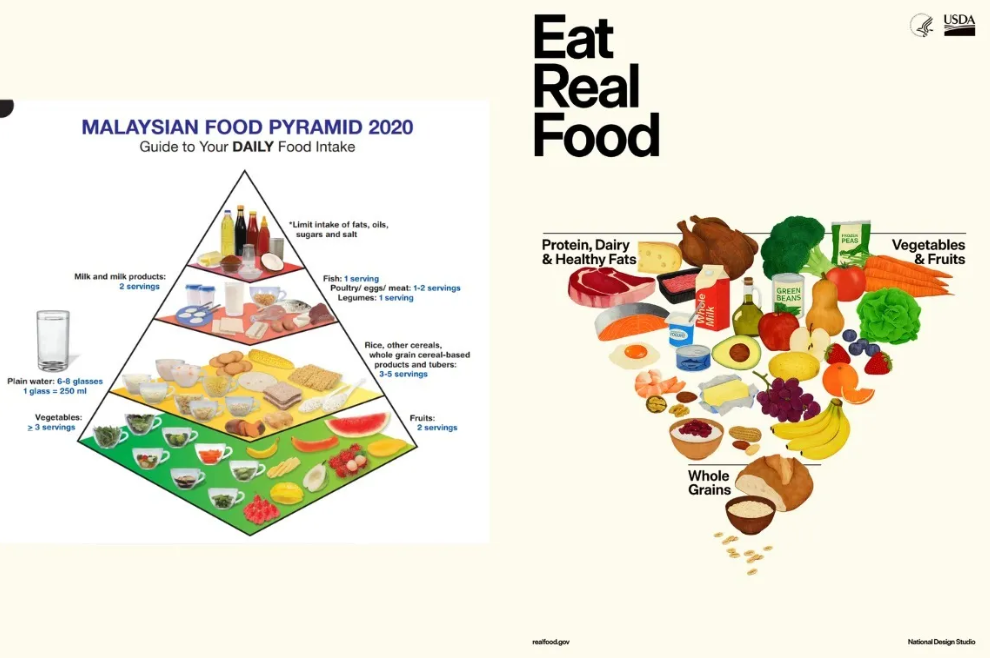
Nutrition experts recommend following the Malaysian Food Pyramid. This guideline was created for our local population, lifestyle, and health needs.
The Malaysian Food Pyramid is a guideline based on science, created by the Ministry of Health Malaysia to help people eat a balanced diet.
It emphasizes:
The main goal is to help people achieve balanced nutrition for long-term health, not just short-term dieting.
Many popular diets, especially those from the United States, are designed for different:
For example, some diets promote:
While these diets might work for some people, using them in Malaysia can lead to:
Malaysians often eat rice, noodles, and a variety of traditional dishes. The local food pyramid includes these foods, so it is practical and easier to follow without big changes to your lifestyle.
The guidelines are developed using Malaysian health statistics, including rising rates of:
This means the recommendations focus on the most important health issues in Malaysia.
Food is an important part of Malaysian culture, from festivals to family meals and eating out. The Malaysian Food Pyramid encourages moderation instead of strict rules, so people can still enjoy traditional foods in a healthier way.
Instead of eliminating entire food groups, the guideline encourages:
This approach is more sustainable than following strict or restrictive diet trends.
The local guidelines take into account which foods are available and affordable in Malaysia. This makes healthy eating possible for more people.
At Vealthme, we support practical wellness solutions based on evidence. Global trends can be helpful, but lasting health begins with guidelines made for your own environment.
For Malaysian individuals and corporate wellness programs, adopting local nutrition principles leads to:
The Malaysian Food Pyramid is more than just a guideline. It is a science-based approach created for Malaysians’ health, culture and lifestyle.
Who here are night owls?
We believe that we cannot sleep early because we’re used to it, and think it’s okay to continue. In fact, you might feel cranky in the morning. But what’s the reason behind this? Is it normal?
In our brain, there’s a section called the prefrontal cortex, responsible for controlling emotions. When you don’t get the recommended 7–8 hours of sleep, your prefrontal cortex becomes weaker, making it harder to regulate emotions, leaving you moody and impulsive.
Many people overlook the science behind sleep deprivation and think it’s not important to get good quality sleep. But here’s what happens when you don’t:
Memory issues and poor concentration
- Lack of sleep raises stress hormones like cortisol, which interferes with the hippocampus which is the brain’s memory center.
Weakened immunity
- During deep sleep, your body produces T-cells (lymphocytes) and cytokines that help fight infections. Without enough rest, your body makes fewer of them.
Weight gain
- Poor sleep increases ghrelin (hunger hormone) and decreases leptin (satiety hormone), making you hungrier and less satisfied after eating.
Increased risk of diabetes
- Sleep deprivation disrupts insulin production and secretion, which is crucial for lowering blood sugar.
Higher risk of heart disease
- Poor sleep raises cortisol and inflammation, which damage blood vessels and promote plaque buildup. Along with higher blood pressure and weight gain, this raises your heart disease risk.
Low sex drive
- Lack of sleep reduces testosterone in men and estrogen in women, both essential for libido and sexual function. Fatigue shifts your body’s focus to survival, not reproduction.
Lack of sleep also lowers productivity, especially when work requires focus. Worse, it can cause microsleep, which is extremely dangerous if it happens while driving, leading to fatal accidents.
Awareness about sleep is still lacking, and many people don’t take it seriously. It may seem trivial, but poor sleep can deeply affect quality of life. Many of us drag out bedtime by endlessly scrolling social media or binge-watching. This “me time” often replaces actual rest.
How to Ensure Good Quality Sleep?
1. Maintain a sleep schedule
- Help your body’s biological clock stay on track.
- Set a consistent bedtime and wake-up time.
- Aim for 7–9 hours of uninterrupted sleep each night.
2. Create a bedtime routine
- Signal your body, it’s time to rest at least 30 minutes before sleep.
- Take a warm shower, read a book (not on your phone), or practice relaxation like stretching, deep breathing, or meditation.
3. Optimize your sleep environment
- Keep your bedroom dark and quiet.
- Use blackout curtains or an eye mask.
- Minimize electronic distractions.
4. Be mindful of your diet
- Avoid caffeine or alcohol before bed.
- Don’t overeat at night, as it may cause discomfort.
- Limit fluid intake to prevent frequent bathroom trips.
These tips can help improve sleep, but if you struggle with conditions like sleep apnea or chronic insomnia, it’s best to seek professional help from a doctor or clinical psychologist.
