

You started a wellness program. Employees participated in the health screening. We did a couple of webinars. The feedback forms returned were positive.
But what do you say when your CEO asks, “Is it working?”
This is the moment many HR managers fear. Not that the program didn't work. But they never put in place the right measures of success to prove that it did. Wellness initiatives are approved on good intentions, killed by not being able to show ROI.
The good news: You can absolutely measure the success of a corporate wellness program and if you know which numbers to track, when to track them and how to present them.
Why Most Wellness Programs Fail to Prove Their Worth?
Wellness program don’t just stop working – that’s not why they’re most often defunded. It is that they were never measured correctly to start with. Without baseline data there is no comparison to be made. Without defined KPIs, everything you get feels subjective.” And without a clear reporting structure, the program becomes invisible to leadership, another line item until budget season. Measurement is not an afterthought. It’s the foundation of all else that can be defended.
The KPIs That Matter!
- Participation Rate in the Program
- What it assesses: The percentage of employees actively participating in your wellness initiatives such as attending screenings, participating in webinars, completing challenges or utilizing wellness resources.
- Why it’s important: The most immediate indicator of whether your programme is reaching people is participation. Here is the calculation : (Number of participating employees / Total number of employees) x 100
Aim to achieve at least 70% of participants rate of every programs that you conducted.
- What it assesses: The percentage of employees actively participating in your wellness initiatives such as attending screenings, participating in webinars, completing challenges or utilizing wellness resources.
- Absenteeism Rate
- What it assesses: The average number of working days lost by an employee due to illness or other health related absence over a defined period.
- Why this matters: This is one of the most transparent financial KPIs available to HR. Each sick day has a direct cost which is in replacement coverage, lost output, and management time. If your wellness program is working, you should see this number trending down over 12 to 24 months.
Calculation method : ( Total number of days absent / Total number of working days ) x 100
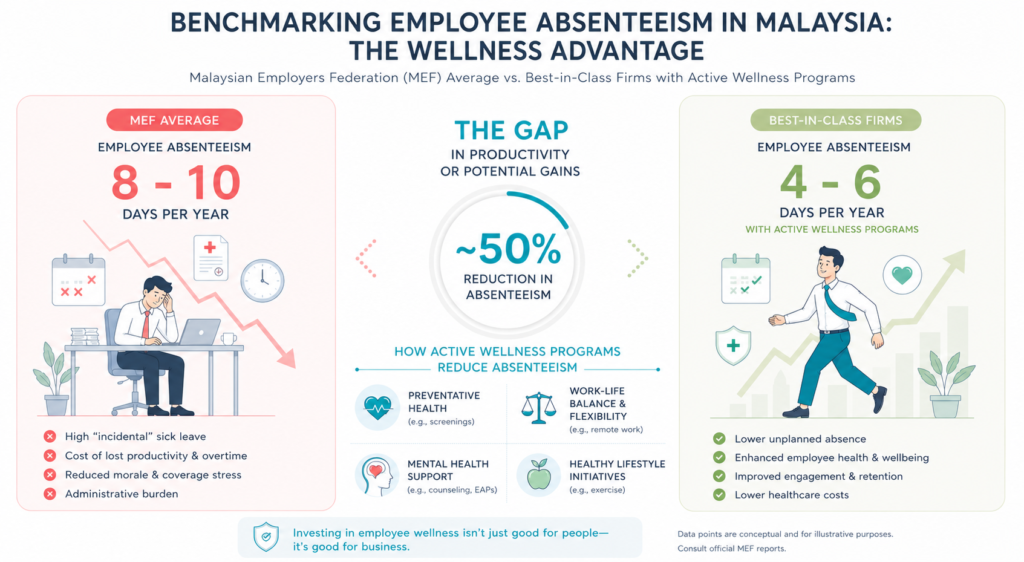
Benchmark: Malaysian Employers Federation (MEF) average employee absenteeism is eight to 10 days per year. Best-in-class firms with active wellness programmes report 4-6 days
- What it assesses: The average number of working days lost by an employee due to illness or other health related absence over a defined period.
- Presenteeism Score
- What it measures: The degree to which employees are physically present but not performing at full capacity such as due to stress, chronic health issues, mental health concerns, or fatigue.
- Why it matters: Research consistently shows that presenteeism costs companies more than absenteeism. An employee at their desk but functioning at 60% capacity is a larger productivity drain than one who takes a sick day. It is also invisible on a standard attendance report.
- How to measure it: Use a validated self-assessment tool such as the Work Productivity and Activity Impairment (WPAI) questionnaire, administered anonymously via survey. Conduct it at baseline and every 6 months.
- What it measures: The degree to which employees are physically present but not performing at full capacity such as due to stress, chronic health issues, mental health concerns, or fatigue.
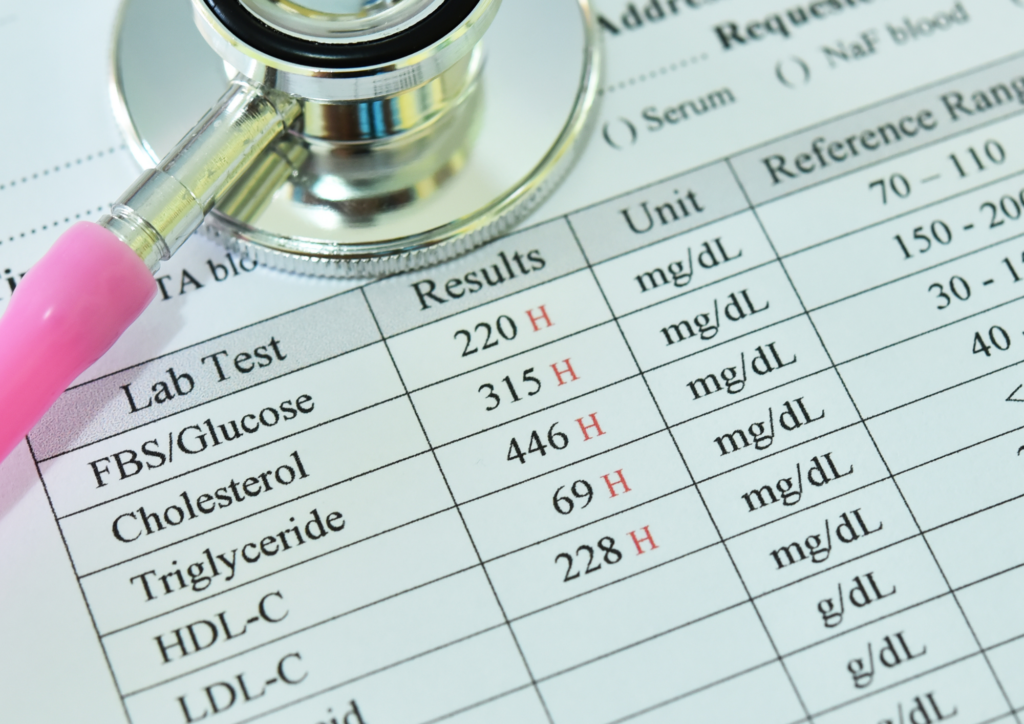
Comparing blood test results before and after the wellness program is the easiest way to track the success of the program.
- Employee Health Risk Assessment
- What it measures: The general health of your workforce – tracking the presence of key risk markers such as high blood pressure, high blood glucose, high BMI, high cholesterol and smoking.
- Why it's important: This is the data that directly links your wellness program to future medical claims and insurance costs. A workforce with a deteriorating health risk profile will mean more claims, more absenteeism and more long term costs. Your wellness investment is a direct return on a more robust workforce.
- How to gather it: This information is from yearly health screenings. The key is to aggregate results at the organizational level (protecting individual privacy) and track trend lines year over year.
This is a good KPI because you will be able to give figures, for example : health screening and nutrition education program reduced the number of employees at risk of high blood pressure from 34% to 21% this year.That is an interesting concrete outcome.
- What it measures: The general health of your workforce – tracking the presence of key risk markers such as high blood pressure, high blood glucose, high BMI, high cholesterol and smoking.
- Medical Claims Utilisation
- What it measures: The frequency and cost of medical claims by employees on their company health benefits - panel clinic visits, hospitalisation, referrals to specialists.
- Why it’s important: This is the most simple financial return measure to hand. A well-run wellness program that identifies health issues early, encourages preventive care and decreases the risk of chronic disease will eventually lower claims frequency and severity. As for this, you may ask your insurance company or HR system for year-over-year claims data. Break down by claim type (outpatient, inpatient, specialist) and track against trends based on wellness program milestones.
- What to show the leadership: A 10-15% reduction in medical claims over two years, in a workforce of 200 employees, can translate into hundreds of thousands of ringgit in reduced benefit costs – dwarfing the cost of the wellness program itself.
- What it measures: The frequency and cost of medical claims by employees on their company health benefits - panel clinic visits, hospitalisation, referrals to specialists.

Medical insurance claims can be compared on a yearly basis.
- Employee Engagement and Wellness Satisfaction Index
- What it measures: Employee perception of the wellness program – is it accessible, does it have value, does it demonstrate that the company cares?
- Why it’s important: Employee perception impacts participation. No matter how well designed, a program that is not trusted or valued by the employees will plateau. Satisfaction scores also give HR actionable feedback on what components are working and what needs tweaking.
- How to measure it: A short quarterly pulse survey (5–8 questions) on: awareness of the wellness resources available, ease of access, perceived quality, and if they feel the company really cares about their health. Target: 4.0 out of 5.0 or above . A program employees like or value.
- What it measures: Employee perception of the wellness program – is it accessible, does it have value, does it demonstrate that the company cares?
As for Vealth.me, we can provide data for 3 out of the 6 company KPIs, namely the Program Participation Rate, Employee Health Risk Assessment, and Employee Engagement and Wellness Satisfaction Index.
Real People, Real Result of Corporate Wellness Program
Our corporate wellness program at Vealth.me has three wellness goals – result-oriented, awareness-based or just a fun environment for employees to learn more about health and wellness.
The program focused on results starts with a health screening to analyze the health status and parameters of the employees. At the end of the program, another health screening is performed to measure the changes and assess the success of the program.
The results are there for all to see. The corporate wellness program, Well-lympics by Vealth.me, has been monitoring the real health data of Malaysian employees since 2021 and the results achieved in only three months show its effectiveness clearly (KPI: Employee Health Risk Assessment).
Our 3- 6 Months Corporate Wellness Program Real Result in WELL-Lympics :
- Fat loss of up to 19.2kg
- LDL-cholesterol reduction of 43%
- Triglycerides reduction of 77%
- Blood glucose reduction of 50%
- Blood pressure improvement of 38%
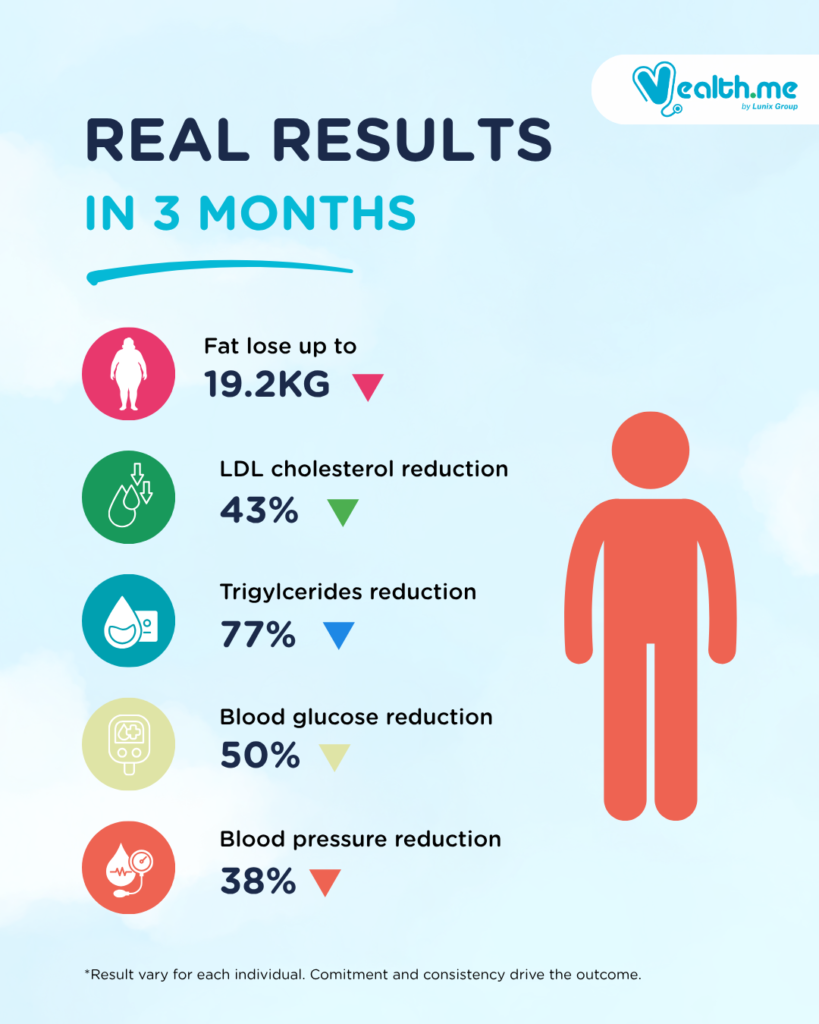
These are not predictions, they are documented results from organized lifestyle change, personal coaching and consistent measurement. The kind of numbers you want to see on your organisation’s wellness dashboard year on year.
Why is This Important for Your Organisation?
The health improvements above are not just personal wins for those who achieved them. These are organisational wins for the companies who invested in making them happen.
Consider what these results mean at scale:
Employees with lower cholesterol and blood glucose are at a significantly reduced risk of hospitalisation, which means lower medical claims and lower insurance costs over time.
Workers with better blood pressure are less likely to experience fatigue, headaches and concentration problems that silently cut productivity every day.
We know that losing meaningful weight during the programme means higher energy, better sleep and improved mood, all of which translate into stronger performance at work.
Employees on a wellness journey say they feel a stronger connection to their team, are more engaged and feel a deeper sense of being valued by their company.
Where to Begin: The Common Problem
The most common stumbling block is not measurement itself but the absence of a beginning. If you have never collected baseline data, you have nothing to compare your results to.
This is exactly why the first year of any corporate wellness program should be all about a comprehensive health screening. The aggregated results form your organizational health baseline – the benchmark against which every subsequent year is measured.
In that one event you get:
- Your initial health risk profile
- Your first participation rate
- The first data layer
That is where everything else comes from.
What a Wellness Program Should Look Like?
Many corporate wellness programs are one-off events – a health talk here, a step challenge there, that feel good in the moment, but leave no lasting mark on employee health.
Well-lympics is a system, so it's different. A structured, data-driven, professionally supported journey that delivers measurable health outcomes in three to six months – outcomes that stick because they are built on habits, not willpower alone.
If your company has been doing wellness initiatives and doesn’t have results like these to point to, it may need to up its game. Get a corporate wellness program that gives you data.
Each program at Vealth.me generates aggregated workforce health data that giving your company the baseline it needs to begin measuring, tracking and demonstrating wellness ROI.
Our programs are intended to be the cornerstone of a measurable corporate wellness strategy, not a one-time event that fades from memory by the next quarter.
WhatsApp us at 018-959 3957 or Email us at [email protected] to get a FREE Proposal.
If you can measure a wellness program, then you can grow a wellness program.

