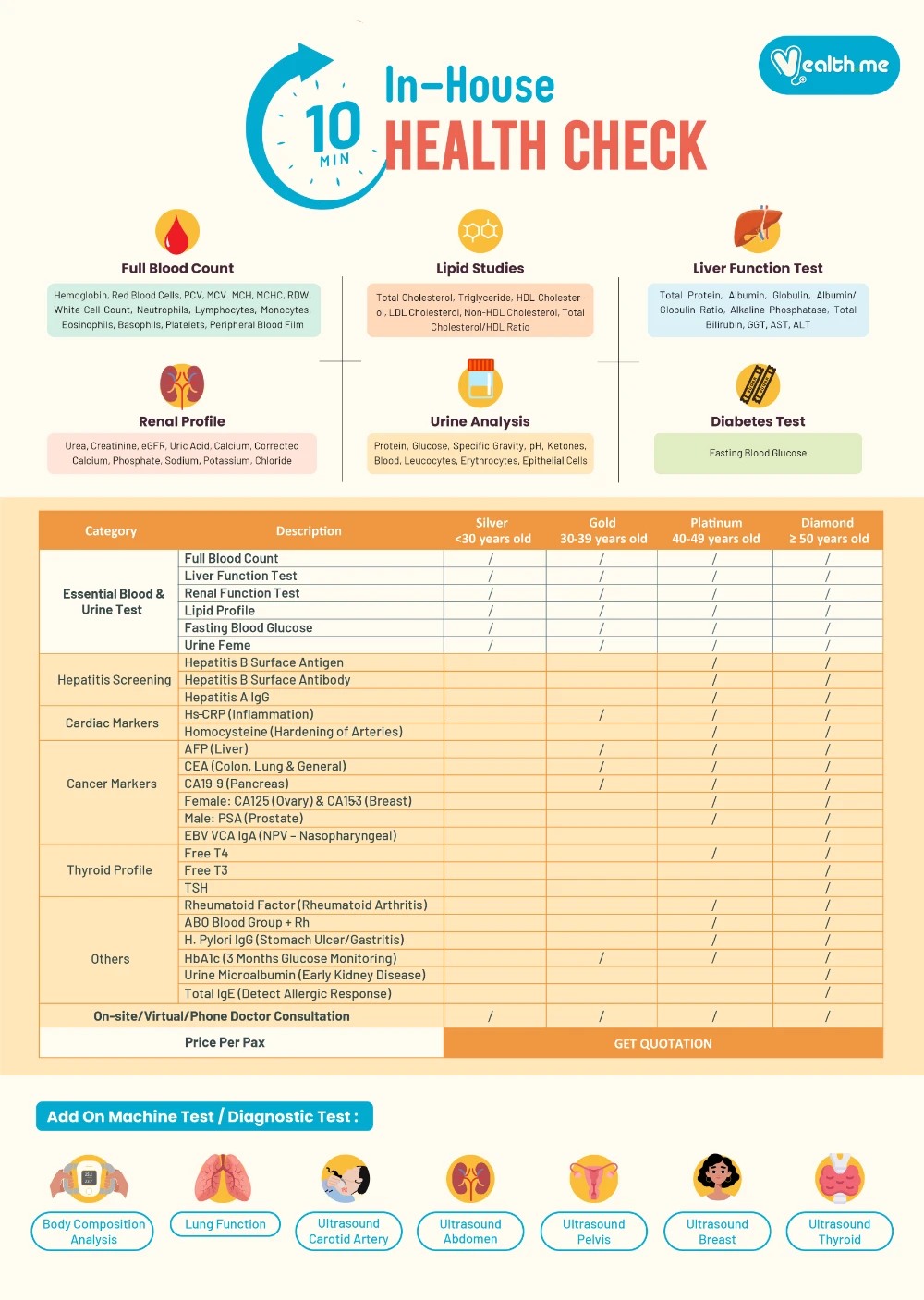
Early this year, America released a new dietary guideline to combat obesity. A study showed that Nearly 90% of health care spending goes to treating people who have chronic diseases, and more than 70% of American adults are overweight or obese. Shocking information is that nearly one in three American adolescents between the ages of 12 and 17 has prediabetes. This guideline is designed to address health problems in America, and the resulting changes are significant in terms of food pyramid segmentation.
However, before we consider adopting this guideline in Malaysia, let's explore its details and relevance.
To provide context, let's first learn more about the new American Dietary Guidelines.
The clear message America wants its citizens to know is to eat real, minimally processed food.
These Guidelines challenge every American to eat more real food and call on all stakeholders: farmers, ranchers, health care professionals, insurers, educators, community leaders, industry, and lawmakers to take active steps and unite in this urgent effort.
What’s in American Dietary Guidelines?
- Eat the Right Amount for You
- The calories you need depend on your age, sex, height, weight, and level of physical activity.
- Pay attention to portion sizes
- Hydration is important (plain water or sparkling)
- Prioritize Protein Foods at Every Meal
- Prioritize high-quality, nutrient-dense protein foods as part of a healthy dietary pattern.
- Consume a variety of protein foods
- Higher intake is encouraged than previous guidelines ( 1.2–1.6 grams of protein per kilogram of body weight per day)
- Consume Dairy
- When consuming dairy, include full-fat dairy with no added sugars
- Dairy serving goals: 3 servings per day
- Eat Vegetables & Fruits Throughout the Day
- Eat a variety of colorful, nutrient-dense vegetables and fruits.
- Eat whole vegetables and fruits in their original form. Wash thoroughly prior to eating raw or cooking.
- Serving goals : Vegetables: 3 servings per day & fruits: 2 servings per day
- Incorporate Healthy Fats
- Healthy fats are plentiful in many whole foods, such as meats, poultry, eggs, omega-3–rich seafood, nuts, seeds, full-fat dairy, olives, and avocados.
- Saturated fat consumption should not exceed 10% of total daily calories.
- Focus on Whole Grains
- Prioritize fiber-rich whole grains
- Whole grains serving goals: 2–4 servings per day, adjusting as needed based on your individual caloric requirements
- Highly Processed Foods, Added Sugars, & Refined Carbohydrates
- Limit processed food
- Avoid sugar-sweetened beverages
- Limit foods and beverages that include artificial flavors, petroleum-based dyes, artificial preservatives, and low-calorie non-nutritive sweeteners
- One meal should contain no more than 10 grams of added sugars.
- Limit alcohol intake
- Consume less alcohol for better overall health.
- Limit sodium intake
- Limit sodium to: < 2,300 mg/day
All seems reasonable and focusing on healthy food consumption, however when we analyse the food pyramid and compare it with Malaysia Food Pyramid the portion is absolutely different!
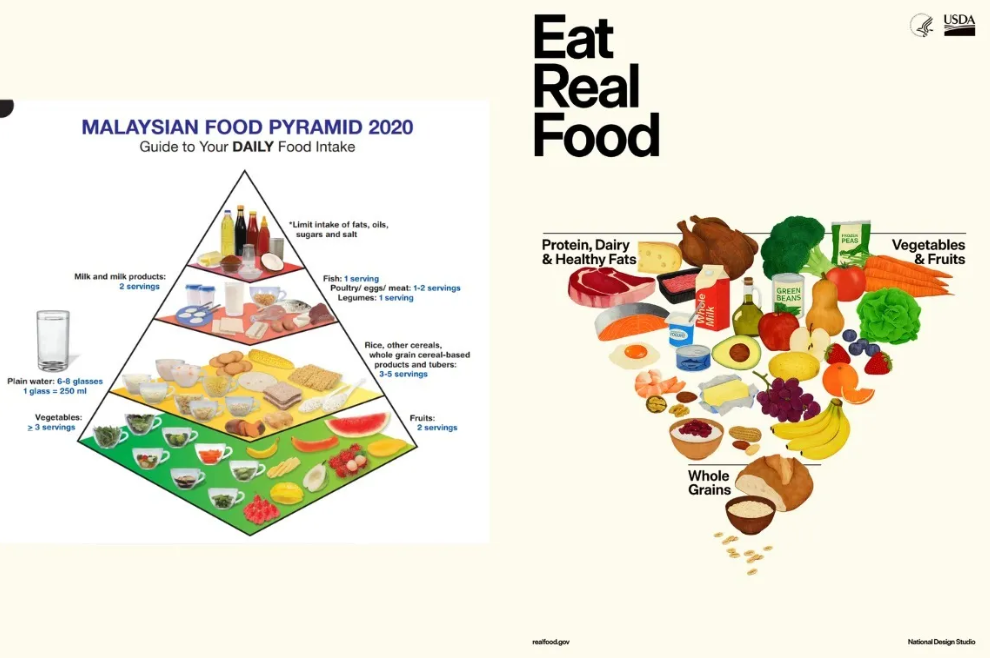
Nutrition experts recommend following the Malaysian Food Pyramid. This guideline was created for our local population, lifestyle, and health needs.
What Is the Malaysian Food Pyramid?
The Malaysian Food Pyramid is a guideline based on science, created by the Ministry of Health Malaysia to help people eat a balanced diet.
It emphasizes:
- A strong foundation of whole grains, fruits, and vegetables
- Moderate intake of protein sources (fish, poultry, legumes, eggs)
- Limited consumption of sugar, salt, and fats
The main goal is to help people achieve balanced nutrition for long-term health, not just short-term dieting.
The Problem with Following Foreign Diet Trends
Many popular diets, especially those from the United States, are designed for different:
- Dietary habits
- Lifestyle patterns
- Health challenges
For example, some diets promote:
- Very low carbohydrate intake
- High protein or high fat consumption
While these diets might work for some people, using them in Malaysia can lead to:
- Nutritional imbalance
- Unsustainable eating habits
- Increased health risks if not properly guided
Why Malaysian Dietary Guidelines Are More Suitable
1. Designed for Local Eating Habits
Malaysians often eat rice, noodles, and a variety of traditional dishes. The local food pyramid includes these foods, so it is practical and easier to follow without big changes to your lifestyle.
2. Based on Local Health Data
The guidelines are developed using Malaysian health statistics, including rising rates of:
- Diabetes
- Obesity
- Heart disease
This means the recommendations focus on the most important health issues in Malaysia.
3. Matches Cultural and Social Practices
Food is an important part of Malaysian culture, from festivals to family meals and eating out. The Malaysian Food Pyramid encourages moderation instead of strict rules, so people can still enjoy traditional foods in a healthier way.
4. Focus on Balanced, Sustainable Nutrition
Instead of eliminating entire food groups, the guideline encourages:
- Variety
- Portion control
- Long-term healthy habits
This approach is more sustainable than following strict or restrictive diet trends.
5. More Practical and Affordable
The local guidelines take into account which foods are available and affordable in Malaysia. This makes healthy eating possible for more people.
The Vealth.me Perspective
At Vealthme, we support practical wellness solutions based on evidence. Global trends can be helpful, but lasting health begins with guidelines made for your own environment.
For Malaysian individuals and corporate wellness programs, adopting local nutrition principles leads to:
- Better adherence
- Improved long-term outcomes
- Healthier workplace cultures
The Malaysian Food Pyramid is more than just a guideline. It is a science-based approach created for Malaysians’ health, culture and lifestyle.